Business
What does Metal Toad do?
Welcome to Metal Toad! So you’ve been hired at this cool tech company cal
Explore the parallels between the dotcom bubble and the current AI landscape, and understand why AI's long-term value remains promising despite short-term volatility.

LinkedIn is awash in prognostication around whether we are in an AI bubble or not. Not surprisingly, investment and tech companies are bullish, while people like Michael Burry—who called the 2008 housing bubble—are declaring shenanigans. My personal prediction? They are both right.
Before you accuse me of sitting on the fence, I think it's important to talk about the time horizon. And the dotcom bubble build up to the year 2000 crash provides an excellent proxy.
Here's a look at the Amazon stock price, starting on May 15, 1997—when Amazon went public—all the way through the peak dotcom bubble valuation at $5.60* per share on December 10, 1999.
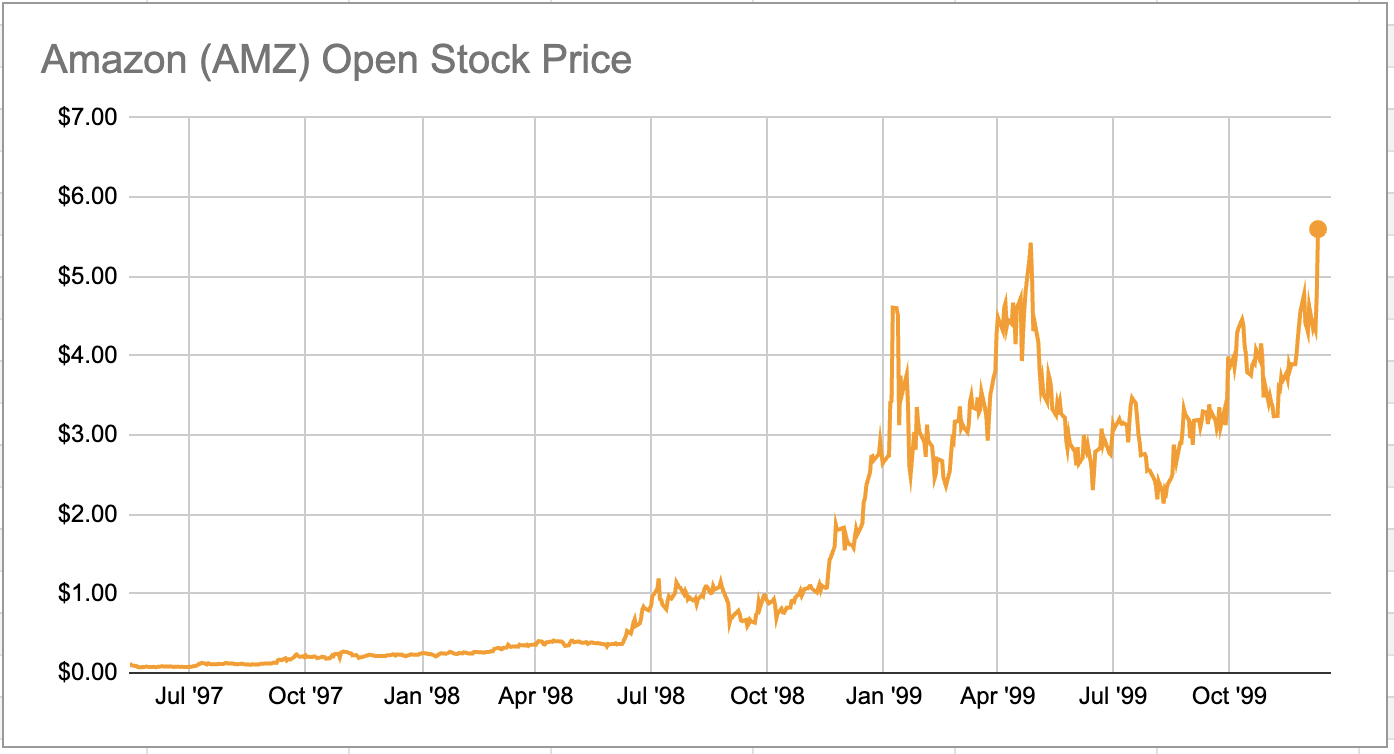
IMPORTANT BUT TECHNICAL NOTE: all stock prices in this email have been adjusted to reflect the change in investment value from a 2025 perspective. The true IPO price of Amazon was $18 per share, but the stock has split 4 times: 2-for-1 in 1998, twice in 1999 (6-for-1 total) and in 2022 20-for-1 split, resulting in a x240 increase the the number of shares. Reversing these splits, results in the graphs we use today, and a IPO price that shows as $0.07 per share ($18 ÷ 240).
At this peak, Amazon stock was valued at x79 their initial IPO share price. If you had invested $10,000 at the start, by 1999, your Amazon stock would be worth $11 million only 2-and-half years later. That's staggering.
Now let's fast forward a year-and-half, to October 1, 2001:
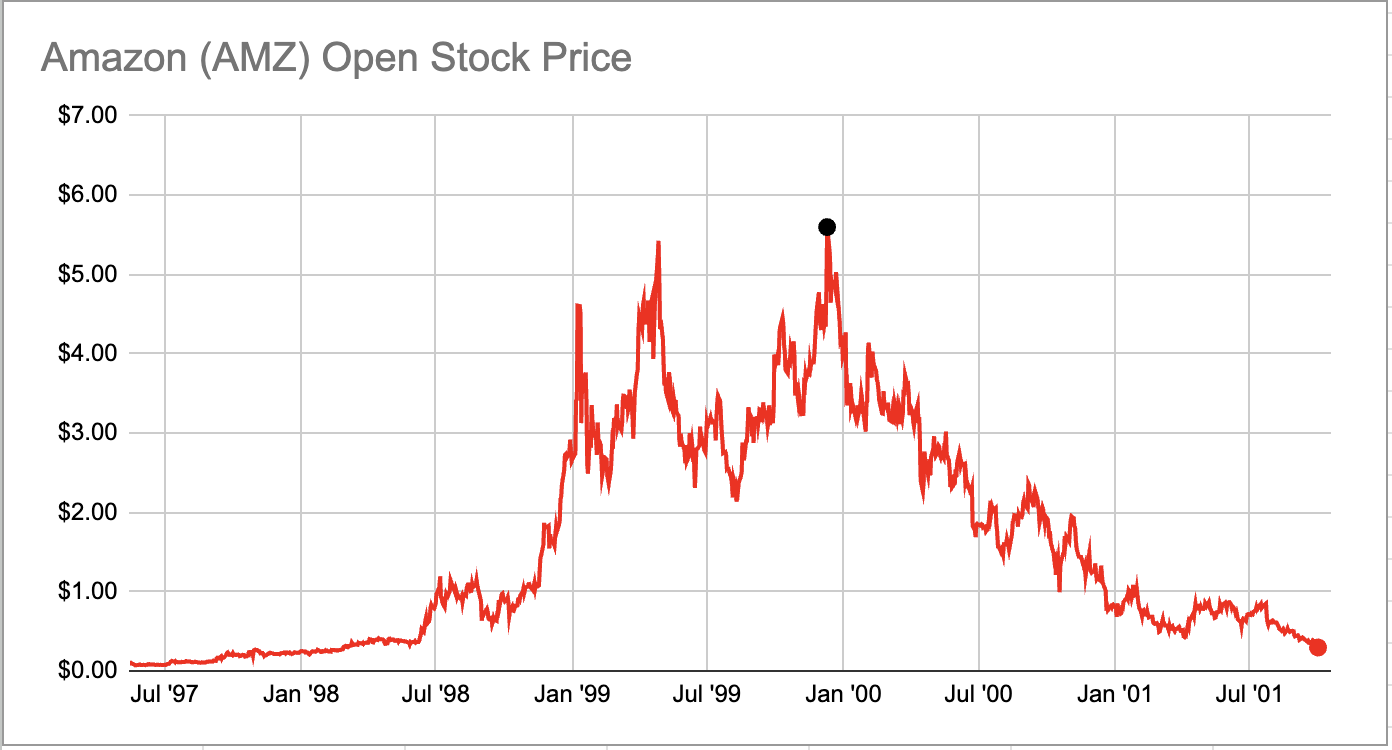 If you had invested $10M back in December 10, 1999, it would be worth a paltry $527,970, a loss of almost 95%. That's also staggering.
It would be over eight years before the stock price would return to the previous high seen in 1999 (see the graph below):

Keep in mind, this represents a break even valuation if you bought at the peak in 1999.
Now let's zoom all the way out to today, 28 years since Amazon's initial IPO, and 24 since since we saw the trough of the dotcom bubble burst:
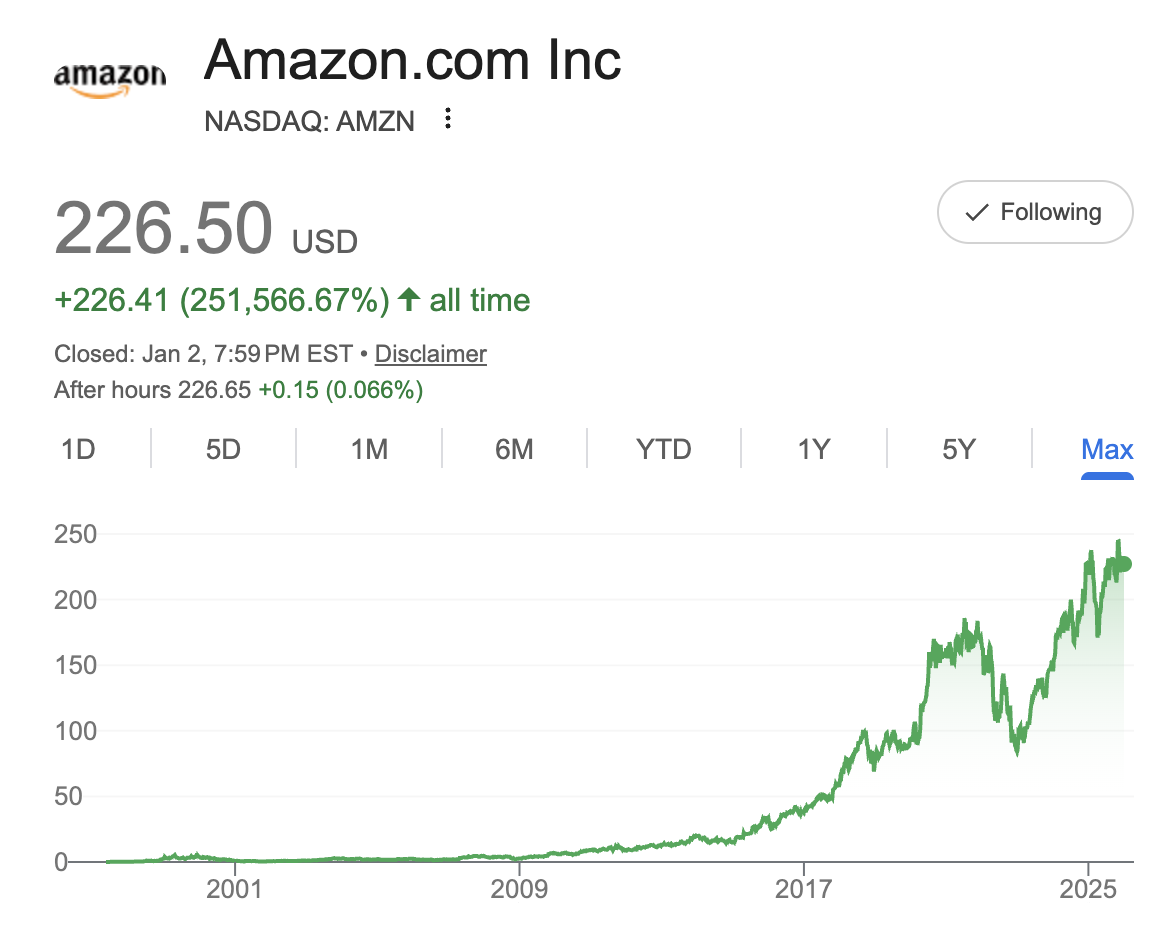
At around $226 per share, almost nothing is visible of the bubble, it's bursting, and the excruciating crawl back to previous highs. It looks like less than a blip, but for people who lived through it and saw over 94% of their investment wiped out for almost a decade, it was very, very real.
And Amazon was one of the lucky ones.
One of the most infamous fiascos of the dotcom bubble and burst, was pets.com (don't bother visiting, it's now owned by PetsSmart). If you want more information you can visit this Investopedia page on it, but the short version is this:
I want to focus on the last two bullets: rush to market with unstable business strategies and the fact that investment banks maintained favorable ratings until it went under. Both of these are hallmarks of a bubble and it sounds a lot like what is happening with AI.
So is AI a bubble? Yes, but just like the internet there is real value there. The graph below illustrates it visually:
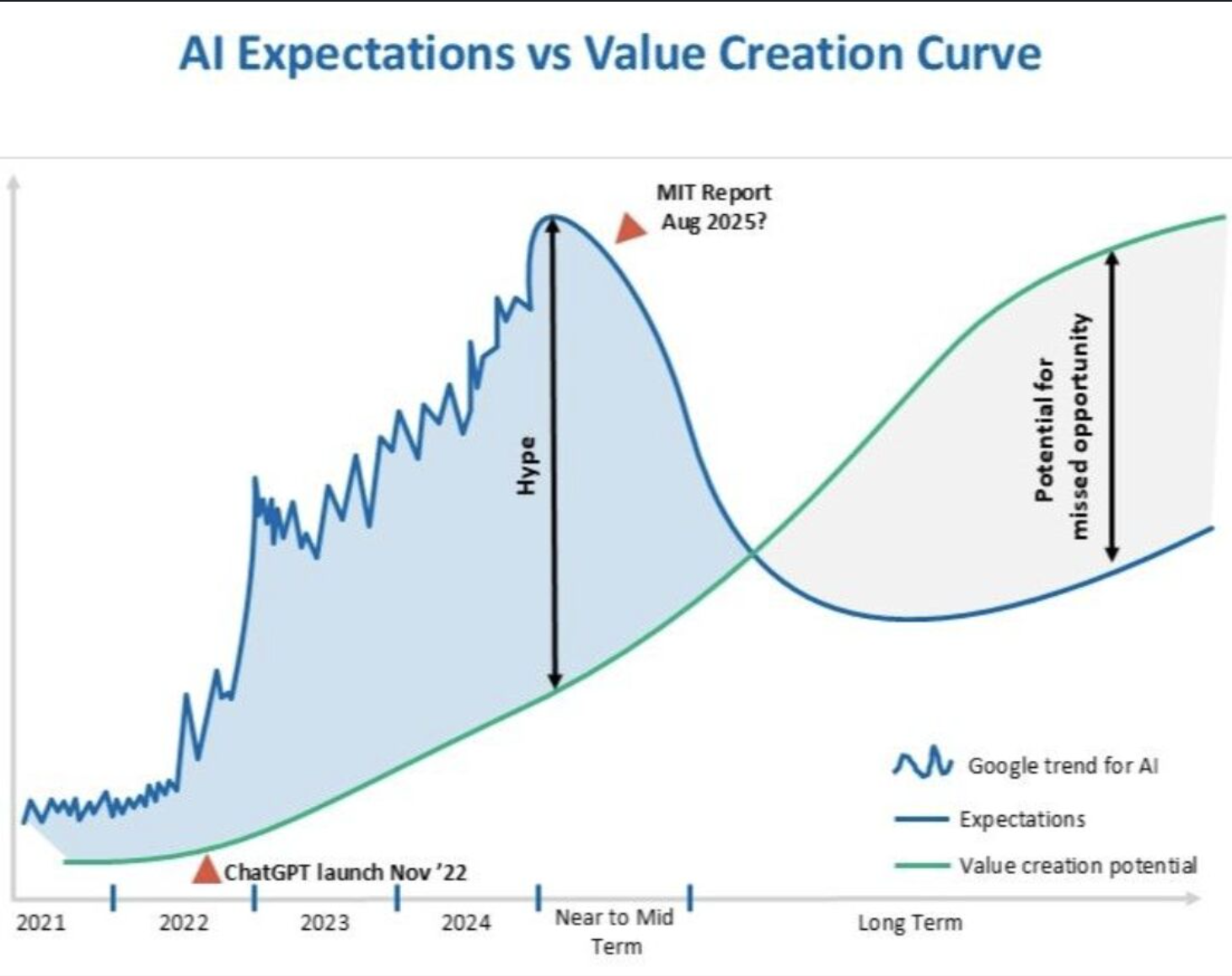
People are attempting to call the AI peak—MIT thought it would be August 2025—but the time axis is also worth exploring: specific years that melt away to "Near to Mid Term" and "Long Term". And I agree. Long term, AI is a good bet; short term, it depends on the use case.
By way of example, we have customers we have helped save hundreds of thousands of dollars per year using GenAI. Does it matter that it's GenAI? Not really. Any workload or tool that can be optimized for real savings or increased revenue has real value. The fact that it's being done with GenAI is incidental.
But for other use cases or workloads that are being promised, it's going to take decades for the technology to live up to the promise. And here's a visceral example: a robot trying to load a dishwasher:
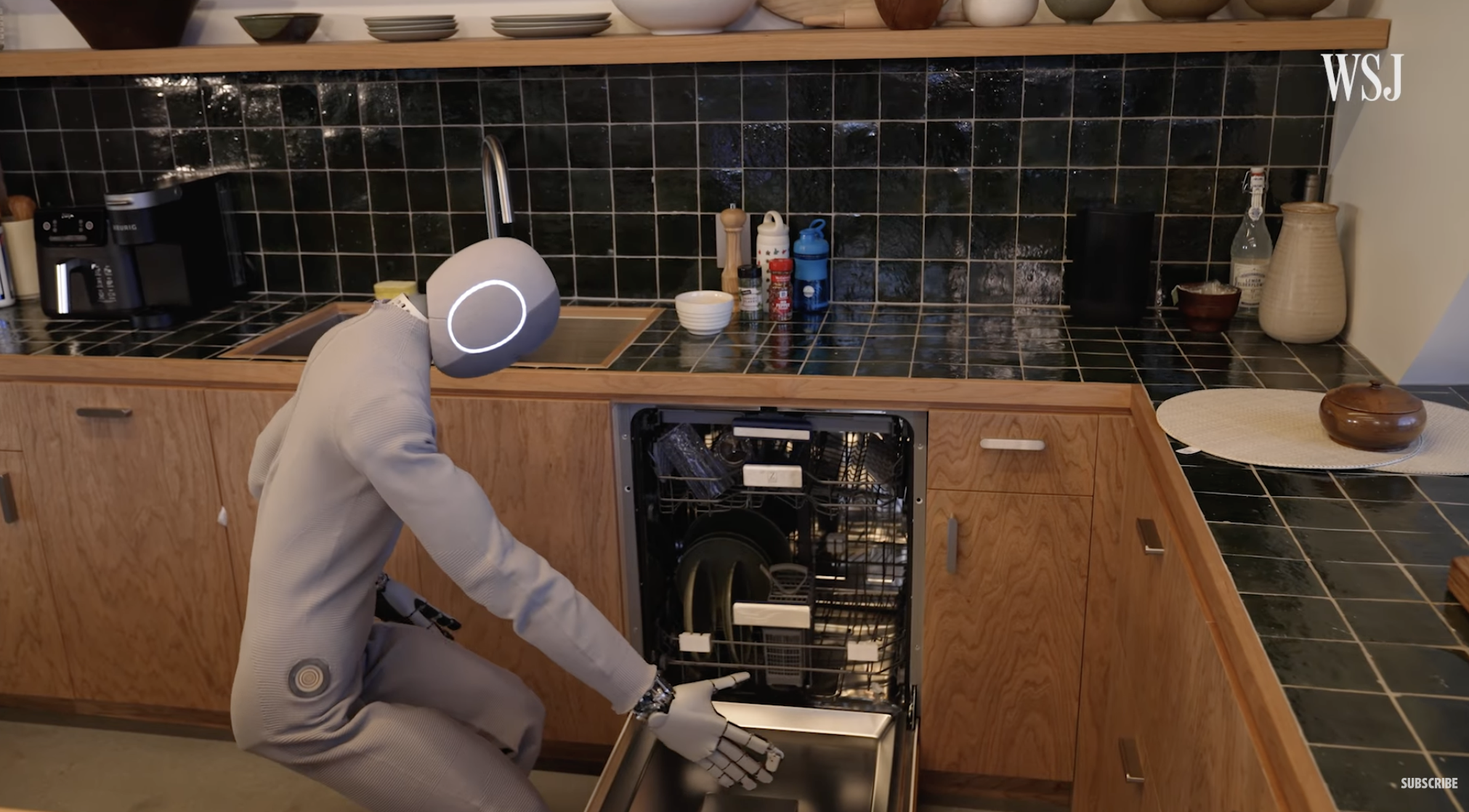
Take a moment to watch the video. I'll wait.
🤔
Are you back? Alright, let's continue.
The struggle session the robot has with the dishwasher is just the tip of the robot-berg. The founder of Neo, Bernt Børnich, goes on to say that early adopters of the $20,000 robot are going to have to be ok with scheduling human pilots to take control of the robot in their home to teach it to do things. Based on what we can see with our own eyes, the Robopocalypse is quite a ways away.
On the software side of AI, Large Language Models and Machine Learning can be harnessed to unlock large amounts of value, but behind the scenes they can face their own dishwasher type challenges. Because this is happening behind the screen the challenges aren't quite as obvious, but they are just as profound. As this Reddit post said, "AI is now available in Excel. Just don't use it if you require answers that are correct".
I've said before that we should be thinking about AI like a mech suit—something that requires a human pilot. And at Metal Toad, we’re helping companies extract value from AI. AI may be a bubble, but focusing on what AI can do today allows companies to unlock real lasting value no matter what.
Welcome to Metal Toad! So you’ve been hired at this cool tech company cal
You know what’s sad to me? It’s sad that most people will never know how liberating it is to come to terms with your unhappiness, and to quit your...
10 years ago, a younger me interviewed a brilliant young man named Tony for a position as a programmer at Metal Toad.